14 Common Misconceptions About Real Estate Business Development
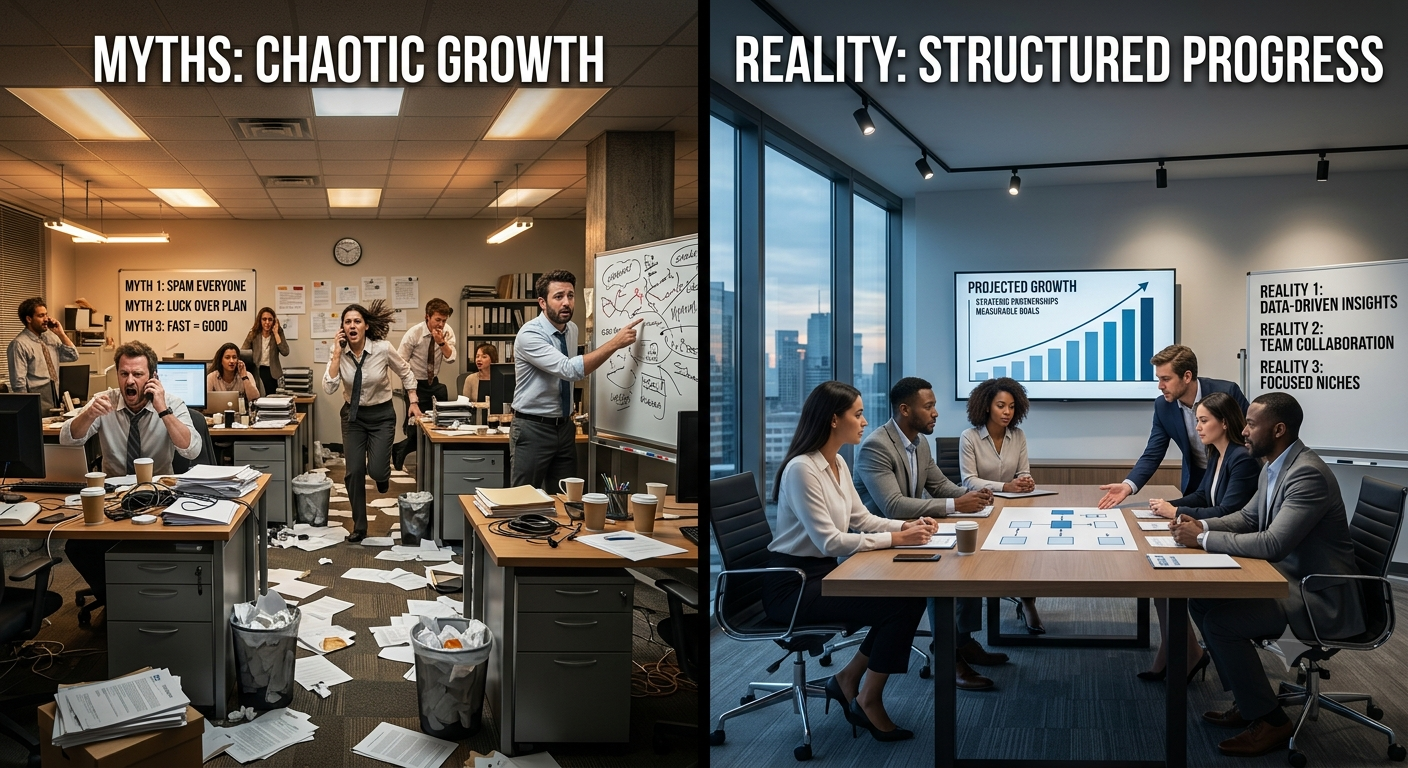
The real estate industry is notorious for its myths—seductive narratives that promise easy money, guaranteed appreciation, and linear paths to success. For professionals serious about business development, these misconceptions are more than harmless folklore; they are strategic traps that can derail growth, drain capital, and damage reputations. Drawing on expert insights and real-world industry experiences, here are 14 of the most persistent misconceptions and the truths that debunk them.
1. “Just Do This One Thing and You’ll Grow”
Perhaps the industry’s most pervasive lie is the promise that a single tactic—running Facebook ads, starting a podcast, or hiring a Business Development Manager—will unlock exponential growth. Real estate expert Kylie Walker learned this lesson the hard way when she added 100 new managements to her rent roll in a single year, only to lose 95 of them .
“I was so focused on growth that I completely neglected structure… My foundations were shaky. I didn’t have the systems or support in place to properly onboard and retain those new clients. My team was overwhelmed, and service delivery suffered” .
The Truth: Growth isn’t about one big thing; it’s about doing many small things consistently and intentionally, with the right strategy behind them. No marketing strategy can save a business that is crumbling behind the scenes . True, sustainable growth comes from integration—when your brand, marketing, service delivery, systems, and mindset work together like a well-oiled machine.
2. Real Estate Development Guarantees Instant Wealth
Popular culture loves the rags-to-riches real estate developer story. Television shows and social media influencers often portray development as “buy low, build fast, and sell high,” glossing over the complexities and risks involved . This misconception attracts many hopeful investors who expect quick returns.
The Truth: Real estate is a marathon, not a sprint . Success requires navigating land acquisition, financing, construction, regulatory approvals, and market analysis—all while managing unforeseen hurdles. Even success stories from seasoned developers often omit the years of hard work and lessons learned that preceded them. When approached correctly, development can be lucrative, but not instantly .
3. You Need a Lot of Money to Get Started
The traditional real estate model presents high upfront capital as a prerequisite, leading many to believe they cannot enter the market without substantial savings or wealthy backers . This misconception often discourages talented and ambitious professionals from pursuing business development.
The Truth: A growing number of entrepreneurs are using alternative structures such as partnerships, revenue-sharing models, and asset-light strategies to enter markets without large upfront investment . The key is to start by mapping out opportunities that do not require ownership and focus on learning operations before scaling assets. As one consultant put it: “Money is a tool. Strategy is the multiplier” .
4. More Information Leads to Better Results
In the age of unlimited online content, many assume that consuming more information will automatically lead to greater success. This “analysis paralysis” can be a significant barrier to business development, where action is ultimately what generates results .
The Truth: Overconsumption of information often delays action and reduces execution. Progress comes from applying knowledge, not collecting it . A practical rule to combat this misconception is: for every hour spent learning, spend at least one hour taking action. Execution matters more than information, but it must be based on the right foundation .
5. You Need to Do Everything Yourself
Early-stage entrepreneurs often equate control with success, leading them to take on every task personally. This mindset limits scalability and prevents the development of systems and teams that can drive growth .
The Truth: Businesses scale faster when systems and teams are implemented early. Documenting daily tasks so they can be delegated is a crucial step toward building institutional competence . One successful developer noted that “building systems and teams allowed me to scale from one unit to dozens quickly” . Delegation and trust are essential for growth.
6. Fast Growth Means Short-Term Thinking
Rapid success is often associated with shortcuts, unsustainable practices, or taking on excessive risk. Some professionals shy away from aggressive growth strategies because they fear these approaches are inherently fragile .
The Truth: While speed can create risk, structured growth built on repeatable systems can support long-term stability. The key distinction is between “intensity for a short period” and “consistency over time” . Tracking weekly numbers and focusing on consistency, not just speed, allows for sustainable scaling.
7. You Have to Wait for the “Right Time”
Market uncertainty leads many to delay decisions, waiting for perfect conditions that rarely materialize. This can result in missed opportunities and a perpetually cautious approach to business development .
The Truth: Economic cycles are always shifting. Waiting for perfect conditions often means watching opportunities pass by. The antidote is to start small: test one idea in a controlled way instead of waiting for ideal timing . Success comes from consistent execution built on clear, simple actions repeated over time, not from perfect timing or perfect knowledge .
8. Real Estate Is a Highly Scalable Business Model
The massive profits made by some developers often lead investors and analysts to conclude that real estate is a highly scalable model. This assumption can misdirect business development strategies toward unrealistic growth expectations .
The Truth: Real estate is actually low on scalability. In contrast to businesses like Facebook, where each new user increases the platform’s value without depleting inventory, every real estate sale reduces the inventory available for sale, shrinking future growth potential . Replenishing inventory takes time and requires additional capital. Additionally, the complexity of real estate operations is high, and every new project brings different kinds of challenges. Specialized skills remain key to growth, and there is an optimal number of projects a developer can efficiently manage .
9. Property Development Fails at Completion
When a development project struggles or collapses, the blame is often placed on poor execution at the end—defective construction, unappealing design, or inability to find buyers. This misconception misses the root cause of most failures .
The Truth: Property development fails in the cash flow, not at completion. The common story is: “Great project, strong GDV, solid demand… but we’ve run out of cash” . The wreckage lies in the gaps between milestones—in the cash flow trenches, not the master plan. Value on paper does not pay subcontractors, fund material inflation, or cover drawdown delays . Developers who survive are the ones who stay funded, not the ones with the most exciting brochure. This means reforecasting cash flow monthly, creating real liquidity plans for worst-case sales scenarios, and asking: “If I had to sell today, could I cover my commitments?”
10. You Are Always in Charge
A common misconception—particularly among aspiring developers—is that the developer sits at the top of a chain, unilaterally directing all aspects of a project. This can lead to overconfidence and a lack of appreciation for the collaborative nature of real estate .
The Truth: Real estate development requires an extensive collaboration network that involves agents, investors, bankers, architects, suppliers, contractors, and government officials . Every step of the process requires input and coordination from multiple professionals. The developer must constantly liaise with these stakeholders, and projects cannot succeed without their contributions. Recognizing the interdependent nature of the business is crucial for realistic planning and execution.
11. You Can Trust the Narrative (Including Your Own)
Builders and developers often cultivate narratives to sell homes before they are built—the dream lifestyle, the exclusive community, the inevitable price appreciation. However, a dangerous phenomenon occurs when builders fall victim to their own narratives . In early 2025, a Central Mumbai builder quoted Rs 1 lakh per square foot for his homes, believing his own luxury narrative. He later had to sell at Rs 60,000–65,000 per square foot—a 35–40% discount .
The Truth: Narrative is a powerful tool in real estate, but it must be grounded in reality. Record-breaking luxury transactions, which dominate headlines, often represent less than 1% of the market. Many builders misinterpreted these exceptions as the norm, launching luxury projects regardless of location, plot size, or brand. When supply surged and buyers hesitated, prices were slashed . The challenge for business development is to use narrative to sell to buyers without being convinced by it oneself. Builders need trusted advisors who can tell them the unvarnished truth without fear .
12. “Home Prices Never Fall”
Perhaps the most well-crafted narrative in real estate is that home prices only go up. Brokers and salespeople repeat it to reassure buyers, and homeowners perpetuate it to protect their dignity . This belief is so ingrained that many buyers make purchase decisions based on a false premise.
The Truth: Home prices do fall—just like prices of stocks, bonds, gold, and onions . The belief that prices never fall serves a specific purpose: in an industry where homes are sold before they are built, buyers need to purchase early to fund construction. If buyers believed prices could fall, they would delay purchases, triggering a drop in sales, funding, and construction . The market, however, does adjust. In South Mumbai, home prices dropped by 10% since 2013, while suburbs saw increases due to shifting business activity . If a broker tells you “home prices never fall,” they either don’t know real estate or they are lying .
13. All Real Estate Is Local
The saying “all real estate is local” is a mantra for agents who want to emphasize their neighborhood expertise. While there is truth in the importance of local knowledge, the phrase is often used to dismiss the impact of broader economic and global forces .
The Truth: Shifts in larger markets often become shifts in local markets. The rise of international buyers in New York, for example, can drive up prices and influence headlines that affect perceptions in other markets . Developers, buyers, and sellers are increasingly thinking about local and global happenings. Keeping one’s head buried in a single market can lead to being caught unprepared by market shifts that originate elsewhere. As one expert noted: “If we have our heads buried too far up the ‘hood-hole that we miss national and international shifts, market changes can catch us unaware and unprepared” .
14. Following the Herd Is a Safe Strategy
When a developer launches a successful project in an underrated location, surrounding firms often rush to build similar projects in the same area. This herd mentality is one of the most persistent and costly failures in property development . The instinct is often driven by FOMO (Fear of Missing Out) and the illusion that “if everyone is building there, it must be the right place to be” .
The Truth: Success for Project A does not create automatic demand for Projects B, C, or D. It often consumes the very demand those later projects were relying on . When supply dramatically outpaces end-user demand, the consequences cascade: margin erosion through discounting, ghost towers with prolonged overhangs, and depressed secondary market values . The most resilient developers break the cycle by shifting from historical demand analysis to pipeline analysis (mapping out every planning submission and land deal in the area), embracing radical product differentiation, and having the courage to say no to deals in saturated markets .
Conclusion
The real estate industry’s mythology is powerful. From the promise of instant wealth to the illusion of guaranteed appreciation, these misconceptions shape strategies, drive investment decisions, and sometimes lead to spectacular failures. For professionals engaged in business development, the ability to distinguish between narrative and reality is perhaps the most valuable skill of all. Sustainable success comes from building strong foundations, embracing the complexity of the business, and surrounding oneself with advisors who tell the truth—even when it is uncomfortable . As the Mumbai Mirror columnist observed, builders need old, trusted people who can give them the unvarnished truth without fear of damage, “because the truth may be silenced temporarily but eventually the market does speak. And you can’t shut down the market even if you are king” .


Join The Discussion