
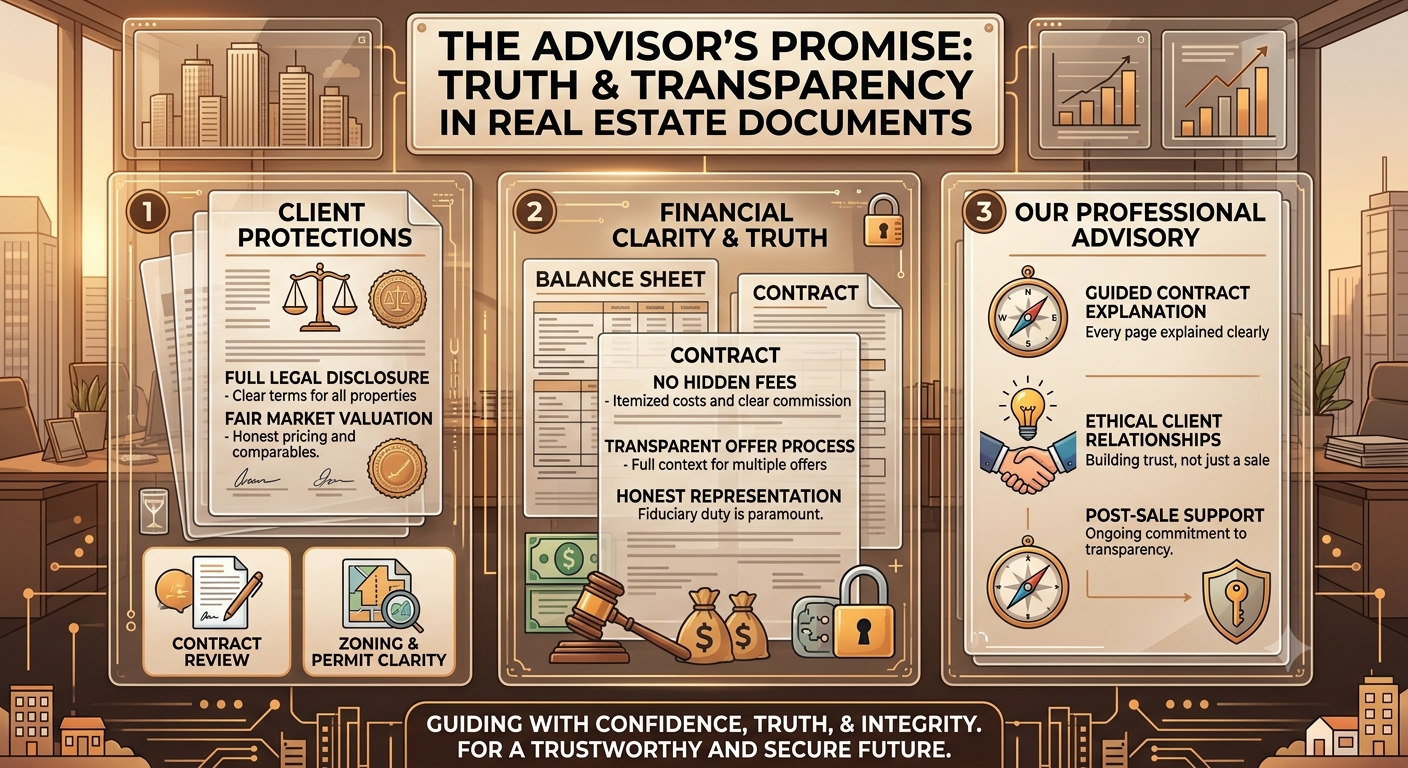
The real estate industry, for all its glittering brochures and promises of passive wealth, is built on a foundation far more complex—and often far less glamorous—than the marketing suggests. Behind the polished facades and “luxury” labels lies an industry wrestling with a deep trust deficit, structural inefficiencies, and a persistent gap between ambition and execution . This article uncovers the truths that the glossy advertisements rarely reveal.
The Truth About “Luxury” Real Estate
Walk into any new development in a major Indian city, and the word “luxury” will greet you at every turn. But here is an uncomfortable truth: most so-called luxury projects are simply premium marketing dressed in expensive brochures .
Real luxury is not defined by marble floors, chandeliers, or fancy clubhouses. It is defined by what doesn’t need to be explained—the right address, a credible developer, timeless design, and long-term relevance . When these elements are genuinely in place, buyers don’t negotiate; they decide. As industry observers note, true luxury is invisible until you live in it and realize nothing could be better. The gap between “premium” and “luxury” is rarely visible on launch day—it reveals itself over time, through the experience of living in the space and the consistency of its governance .
The Hard Truth About Property Prices
One of the most persistent myths in real estate is that property prices never fall. This is false. Property prices can and do decline in areas where supply exceeds demand or due to specific local issues .
The decline is often disguised. When builders offer fancy incentives—free parking, stamp duty waivers, zero GST, gold coins, or free modular kitchens—they are essentially hiding a price cut through creative marketing . The price drop is real; the packaging is simply designed to make it palatable.
Furthermore, real estate is not immune to economic downturns. Market fluctuations due to interest rates, government policies, or global financial headwinds can cause values to drop significantly. Unlike stocks, which allow for course correction, you cannot change a property’s location or fundamental issues. Inflation can erode real returns over time, and a property that is difficult to sell due to location-specific issues can quickly become a bad investment .
The Truth About Passive Income
The image of the landlord growing rich while sleeping is another seductive myth. Real estate is rarely a passive investment and requires active management . Rental property owners must engage in tenant search, lease agreements, and ongoing maintenance. In case the investment is in an under-construction property, one has to be mindful of project progress .
Property gurus on social media often paint a picture of effortless wealth, but the reality is that their income often comes from selling courses and mentoring packages, not from property itself . If their strategy was genuinely as low-risk and high-return as they claim, they would have less incentive to sell courses. Their curated wins on social media rarely show the failed refurbishments, legal disputes, tenant problems, or cash flow stress that are part of the real experience .
The Delivery Gap: Ambition vs. Reality
The real estate industry has spent years building the infrastructure for ambitious goals—whether in sustainability, affordable housing, or technological transformation. But there is a persistent gap between the targets set and the actual delivery .
ESG and Sustainability
In the sustainability space, the numbers tell a stark story. According to GRESB’s 2025 data, 81.5% of participating entities have ESG policies, yet global like-for-like greenhouse gas emissions fell by just 0.23% . This is not primarily a technical problem; it is a structural and behavioural one. The metrics the sustainability industry relies on—carbon intensity, science-based targets—are not the metrics capital allocators make decisions with. Energy efficiency, net operating income, and exit liquidity are. Until decarbonisation is framed in those terms, it will continue to compete with other capital priorities and frequently lose .
The valuation system is part of the problem. Valuers can only formally reflect risks already visible in transaction evidence. They follow the market; they do not lead it. So until brown discounts show up consistently in comparable transactions, they cannot be formally priced in .
Regulatory and Execution Gaps
In India, the Economic Survey 2025–26 flagged restrictive land-use norms as a key factor behind constrained housing supply . Low Floor Space Index (FSI) caps limit vertical development, push cities to expand outward, raise land values, and create artificial scarcity in core urban areas. Compared with cities such as New York and Hong Kong, with FSI of 15 and 12 respectively, Indian cities have much lower limits—Mumbai at 1.3, Delhi at 3.5, and Bengaluru at 4 .
Restrictive land-use rules turn land into “dead capital” due to title insecurity, fragmented markets, and speculative incentives that limit land recycling . Unclear land titles, fragmentation, and opaque records remain key constraints, stressing that secure, transferable property rights are essential for land to function as capital.
The affordable housing cap of ₹45 lakh is increasingly disconnected from urban market realities. When policy thresholds do not reflect land, construction, and compliance costs in metros and growth corridors, affordability-linked incentives lose relevance .
The Truth About Execution
For decades, India’s real estate sector grappled with a deep-rooted trust deficit. Project delays, opaque practices, and unresolved consumer grievances shaped the image of an industry long dogged by credibility concerns . Glamorous launches and luxury towers did little to disguise structural inefficiencies.
The turning point arrived with the Real Estate (Regulation and Development) Act, 2016 (RERA), which forced a transition from freewheeling expansion to structured accountability . Developers were required to commit to timelines, ring-fence project funds through escrow, and disclose real-time construction updates. The business environment has transformed dramatically, with regulatory measures ushering in unprecedented levels of accountability and transparency.
However, the shift is still incomplete. Execution delays persist. Approval delays create a “time tax” through interest costs and rework, which eventually gets passed on to homebuyers . The industry continues to call for time-bound single-window approvals, land-record digitization, and regulatory predictability.
Industry leaders increasingly recognize that credibility, once built on legacy and name recognition, is now judged on delivery consistency, construction quality, and customer experience . Trust is not inherited; it is earned through purpose, performance, and perseverance. Homebuyers have become far more discerning and informed. Today, trust is no longer secured through brand visibility alone; it is earned through consistent performance, transparent conduct, and long-term commitment .
The People Truth
While land has traditionally been the defining strategic asset in real estate, a new truth is emerging: people strategy is becoming as important as land strategy .
India’s real estate and construction ecosystem employs nearly 71 million people, making it the country’s second-largest employment generator. Yet a significant majority of this workforce remains unskilled. As the sector advances toward an estimated one-trillion-dollar market size by 2030, this imbalance represents a structural risk. Skill shortages influence timelines, cost efficiency, and quality outcomes .
Land creates opportunity. Talent ensures delivery. Contemporary developments demand multidisciplinary coordination across sustainability, digital engineering, finance structuring, regulatory compliance, and customer relationship management. The competition for skilled professionals is real and growing .
Global research reinforces this reality. Studies have consistently linked workforce capability and management quality with productivity growth. Human capital limitations translate directly into project cost overruns, schedule slippages, and compromised quality. Recruitment is not about filling vacancies; it is about building institutional competence .
The Technology Paradox
Proptech has grown into a $30-billion-plus industry, promising to revolutionize how homes are bought and sold . Yet the experience for most people still feels the same: complicated, expensive, and confusing.
The proptech paradox is that we have digitized everything except the part that actually needs disruption. Listing portals still sell leads to agents. Transaction platforms still depend on old commission models. Even “instant offer” programs ended up rebuilding the same pricing opacity they claimed to fix, just behind algorithmic curtains. Proptech didn’t fail; it just stopped short .
The next wave of proptech won’t be about flashy design or machine learning buzzwords. It’ll be about trust. True disruption in real estate doesn’t come from another app or faster interface. It comes from shifting control of data, pricing, and process back to the people actually buying and selling. Until consumers can see the same verified data the industry uses, every new “innovation” is just another middle layer between them and the truth .
Conclusion
The truth about the real estate industry is that it is undergoing a fundamental transformation. The glossy marketing, the promises of effortless wealth, and the perception of guaranteed appreciation are giving way to a harder, more honest reality. Success now depends on execution, transparency, governance, and trust .
Developers who have not just chased valuations but created enduring value have emerged as true institutions of trust. Institutional investors, regulatory reforms like RERA, and an increasingly informed consumer base are reshaping the sector . Consolidation is also reshaping the market, with the top 10 developers in major metro markets now controlling over half of the new supply .
The challenges remain significant—execution gaps, rising inflation, construction costs, and inventory overhangs all pose risks . But the direction is clear. From opacity to openness, from speculation to structure, the industry is rewriting its trust contract with both buyers and investors. What once depended on marketing optics is now driven by measurable performance, transparent reporting, and technology-enabled execution. Trust is not an add-on—it is the product itself .

Join The Discussion